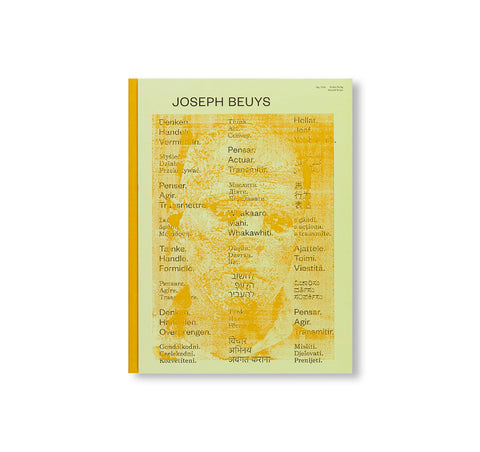
JOSEPH BEUYS AND HISTORY by Joseph Beuys
ドイツ人アーティスト、ヨーゼフ・ボイス(Joseph Beuys)の研究書。作者(1921–1986)は、20世紀でもっとも重要な、そしてもっとも論争を呼んだ芸術家の一人である。第二次世界大戦直後のドイツを拠点に、パフォーマティヴなアクションから大規模な彫刻群にまで及ぶ実践を通じて、根本から拡張された芸術概念を探求した。「すべての人間は芸術家である」という作者の主張を、解放的な、さらには革命的なものと受け止めた同時代人がいた一方で、危険な個人崇拝を助長していると非難する者もいた。作者を対象とした英語による初の本格的な美術史研究である本書において、アメリカの美術史家、ダニエル・スポールディング(Daniel Spaulding)は、作者の作品と経歴について鮮やかな新しい解釈を提示する。
著者は作者を戦後ドイツの復興という文脈のなかに置くことで、作者が重ね合わせた生物学的、政治的、経済的なメタファーが、人間の自由がたどる軌跡、資本主義的近代における芸術の位置、そしてエコロジカルな美学の可能性を考えるための力強い方法となっていたことを示す。同時に、その作品群に響くナチスの過去の不穏なこだまは、作者が「社会彫刻」と呼んだもののなかで、すべてが調停されえたわけではなかったことを示唆している。
しばしば誤解されてきた人物についての決定的な論考である本書は、マルクスの価値形態論、ハンス・ブルーメンベルク(Hans Blumenberg)の「メタファー学」、そしてエコロジー思想を手がかりに、近現代美術の支配的な物語を大胆に書き換えることを試みる。作者が芸術の極限にまで至ったからこそ、その歴史の中心に位置づけられるべきであることを、本書は明らかにする。
Joseph Beuys (1921–1986) was one of the most significant artists of the twentieth century—and one of the most controversial. Working in Germany in the aftermath of World War II, he explored a radically expanded concept of art through a practice that ranged from performative actions to large-scale sculptural ensembles. While some contemporaries found his claim that “everyone is an artist” liberating, even revolutionary, others accused him of fostering a dangerous cult of personality. In Joseph Beuys and History, the first rigorous art historical study of the artist in English, Daniel Spaulding presents a striking new interpretation of Beuys’s work and career.
By putting Beuys in the context of Germany’s postwar recovery, Spaulding shows that the artist’s superimposed biological, political, and economic metaphors offered a powerful way to think about the trajectory of human freedom, the place of art in capitalist modernity, and the possibility of an ecological aesthetics. At the same time, his oeuvre’s disquieting echoes of the Nazi past suggest that not everything could be reconciled in what Beuys called “social sculpture.”
A definitive account of an often-misunderstood figure, Joseph Beuys and History proposes an ambitious rewriting of the dominant narrative of modern and contemporary art, drawing from Marxian value-form theory, Hans Blumenberg’s “metaphorology,” and ecological thought. Precisely because Beuys went to the extremes of art, the book demonstrates, he belongs at the center of its history.