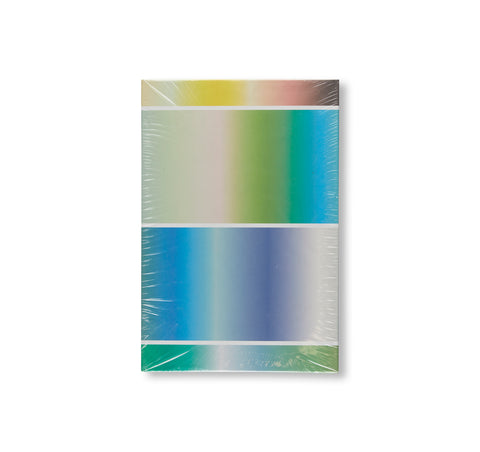
WHY IS COLOUR BETTER THAN GREY / なぜグレーよりカラーがいいのか by Anri Sala
アルバニア人アーティスト、アンリ・サラ(Anri Sala)の作品集。
2003年3月 ウィーン
エディ・ラマ:このプロジェクトは、全体主義体制時に建てられた多くの建物が、独裁政権崩壊後、不法な増改築で外観が損なわれたことへの解決策を見出そうと行われたものです。こういったビルは、前政権お墨付きの建築家たちが設計したものですが、後に、政変後の自由と無政府状態のはざまで、政府と無関係な建築家たち、そこの住人や家族が自分たちの家を増改築し住空間を変えていったんです。ベランダを台所にするとか、窓をつくったりとか、アパートを店に変えたり、上の階の住人のためにあらたなフロアを設けたりといった具合に。住む側からすれば、こうした増改築は居住空間の幅を広げて生活をより良くしていくことになりました。でも、そのせいで、建物の正面は悪夢のような灰色の歪んだ構造になってしまい、街を息苦しくしてしまいました。独裁政権の崩壊によって、集産主義的な社会は個別化したものへと完全に生まれ変わり、そこでは、すべての人が一個人であり、彼らにとって公共の場は、自分の物のようにして、侵入し、好き勝手にできる場所だと理解されたのです。外壁を色で塗ろうという私たちの取り組みは、不法改築によって見苦しくなってしまった建物を何とかするためのものなのです。そして、調和を生み出しそれを本来の建物の正面に広げたかったのです。でも、よく見てみると、本来、規則正しく同じ大きさに区切られていた建物の四角は、乱暴に手を加えられた表面では非常に不規則かつ様々になっていました。色彩は何かが変わり始めたというサインを人々に与える手助けになると思います、今、地域社会という意識のないコミュニティに介入しなければいけないというのは、非常に難しい瞬間です。そこは、自分たちの公共の場や都市、国、その価値観に属する意識は失われた状態なんです、何故なら半世紀に及ぶ全体的な価値体系はもうそこには存在せず、 完全に失われてしまっているから。その空虚さのなかで、人々は、公共空間に抵抗せざるをえない、そして曖昧なものとしての未来の名のもとに、兵士としてその場を占拠しながら関係を構築していくんです。ある意味で、これらの色は、「置きざりにしないでくれ」と舟に向って言おうとしているロビンソン・クルーソーの火のようなものではないでしょうか。私の場合、船に絶対に出航しないでくれと言おうとしているんです、みんながその船に乗って旅出とうとしている訳ですから。
本書テキストより抜粋
日英併記。
Vienna, March 2003
Edi Rama: This project consists in finding a solution to something that has to do with a countless number of buildings that have been built during the totalitarian system and that after the fall of the dictatorship have started to get deformed by illegal interventions. These types of buildings have been conceived by official architects of the regime and after have been reconceived by unofficial living architects, people, families who after the changes in the moment of freedom and anarchy started to increase the spaces of their houses, transforming the space and intervening, changing their balconies into kitchens, opening their windows or transforming their apartments into shops, or building, for those who were in the upper floors, extra floors. From inside these interventions have served to make the people's life better, increasing the volume of their living space. But the façades turned into nightmarish, grey and deformed structures that gave to the city a lack of breathing. The fall of the dictatorship gave birth to a society that from a totally collectivistic one, turned into an atomised society, where everybody is an individual that conceives the public space as a space to be occupied, violated, brutalized. Our effort consisted more or less in colouring the accidents committed against the form of the buildings as a result of the unlawful interventions. Then because we wanted to create some harmony, we spread them out also on the original façade. But if you look carefully at them, the squares are regular and of the same size on the original façade and very irregular and with various forms on the violated surfaces. Colour has helped, I believe, to give a sign to people that things have started to change, because it is a very difficult moment, the moment when you have to intervene in a community that has no sense of community, that has lost the sense of belonging to their public space, to their city, their country, to the values, because the whole system of values which existed for half a century, is not there anymore, a value system is totally missing. So in this emptiness people relate to the public space as soldiers who have to resist it and occupy it in the name of a future that remains abstract. In a certain extend, I would say that these colours are like the fire of Robinson Crusoe trying to tell to the boat: Don't leave without me. In my case, it is trying to tell to the boat not to leave at all, because people are all trying to get the boat and leave.
text from this publication
Japanese / English

![CONTES DE SONS QUI SE PRENNENT POUR UN AUTRE by Anri Sala [LP]](http://twelve-books.com/cdn/shop/files/0_45f42b9f-6789-4fc2-b133-a9c4a0612d71_large.png?v=1734803486)